Industries — Automotive
Dealership, service bay and workshop flooring
An automotive floor is really three floors wearing one badge. The showroom is retail — light, gloss and finish quality, judged by customers from the doorway. The service bays are industrial — hoists, jacks, dropped tools, and a chemical set that includes one of the coating world's genuine enemies, brake fluid. And the wash and detail bays are wet rooms, closer to a commercial kitchen than to the showroom thirty metres away. Coating all three with the same system is how dealership floors end up failing in one zone while looking fine in another.
West Pacific specifies each zone against its own conditions, from the manufacturer system lines we install across our commercial and industrial work. The result is one continuous standard of floor across the property, with different chemistry underneath it where the duty changes.
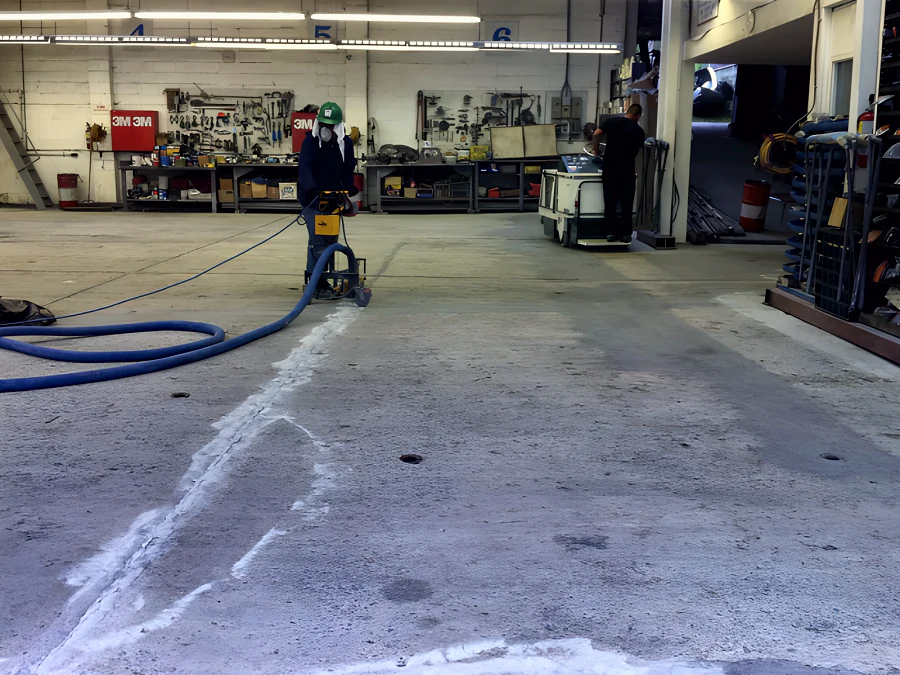
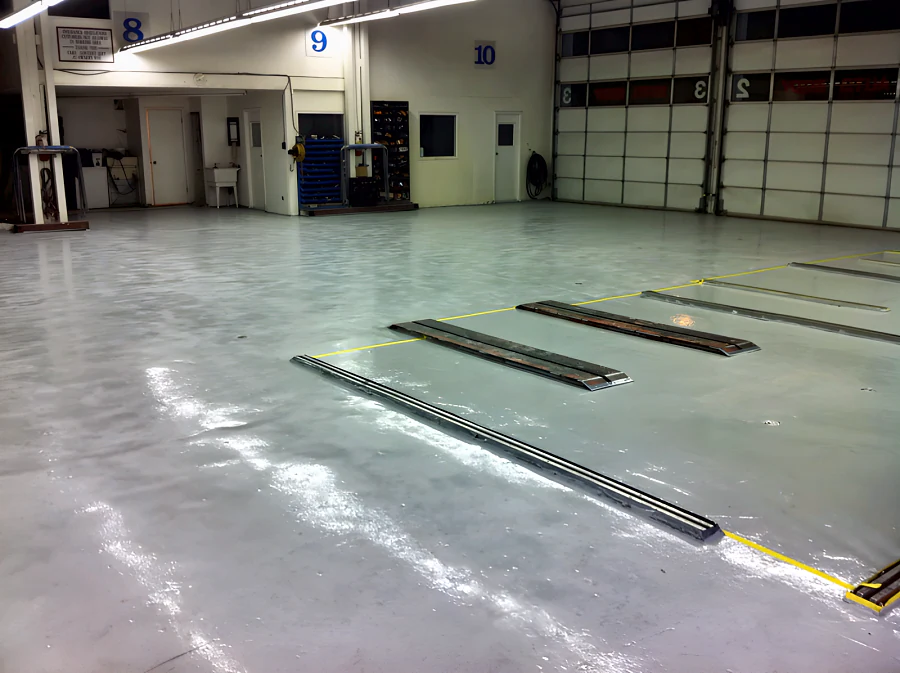
An auto body shop on Main Street, Vancouver, in 2011: floor cracks ground out under dust extraction (left), and the finished light grey coating laid around the frame-machine rails (right). More on the projects page.
Zone by zone
Three duties, three specifications
| Zone | What attacks the floor | What the specification prioritises |
|---|---|---|
| Showroom | Tyre contact, daily cleaning, sunlight at the glass line | Appearance and gloss retention, UV-stable topcoats, repairable finish |
| Service bays | Brake fluid, oils, coolant, fuel; point loads from hoists and jacks; dropped tools | Chemical resistance verified per datasheet, impact tolerance, hoist-base detailing, line marking |
| Wash & detail bays | Constant water, warm detergents, pressure washing | Hot-water tolerance, falls to drain, coving, slip resistance when wet |
| Parts & storage | Racking loads, cart traffic | Abrasion resistance, dust-proofing, economical build |
Chemical resistance is a per-product, per-chemical table in the manufacturer's documentation — a floor is specified against that table, not against the phrase "chemically resistant".
Working around bookings
Coated without closing the department
Dealerships run on booked service hours, so the floor work runs around them. Bays rotate out of service in groups, prep and coating land on evenings and weekends, and each group returns to service once cured — the department keeps trading through the project. Showroom work is sequenced around vehicle moves and launch events, and wash bays are done one at a time so cleaning capacity never fully stops.
Preparation gets no shortcuts for the schedule: existing coatings and oil-soaked concrete come off mechanically, oil-contaminated slabs are assessed honestly — heavily soaked zones can defeat any coating and are identified before quoting, not discovered after failure — and hoist bases, anchor points and floor drains are detailed as part of the system. The sequence and standard are the same as the rest of our commercial and industrial work; only the calendar is different.
Recent work
Mazda Richmond Automall, service shop
A service bay is one of the harder floors to specify. It takes hoist loads and dropped tools, oil, coolant and brake fluid, tyre scuff at every turn, and it still has to look presentable to a customer standing at the service desk looking in. The concrete here was bare and patchy — porous, stained, and impossible to keep looking clean however often it was swept.
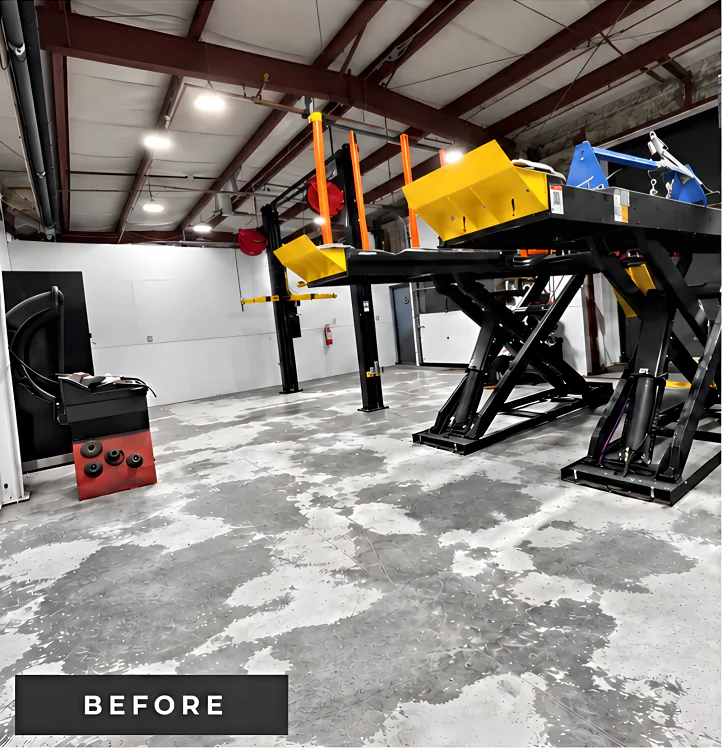
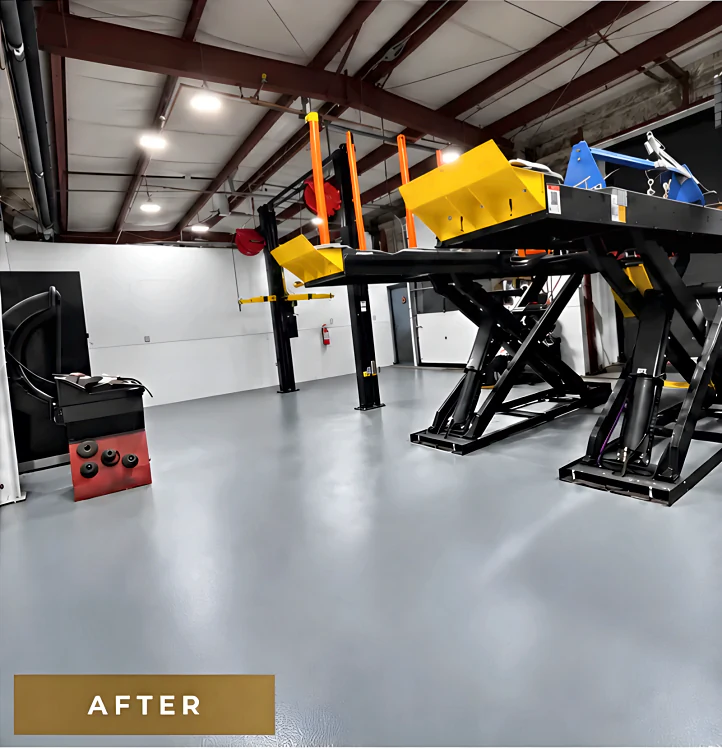
The floor was rebuilt in a ResinTech EWS-S system and finished light, which is why the bay reads brighter in the second photograph under exactly the same lighting.
- Client
- Mazda Richmond Automall
- Setting
- Mazda service shop
- Location
- Richmond, BC
- System
- ResinTech EWS-S
- Completed
- Winter 2025
Richmond Auto Mall
Toyota dealership, service drive
A Toyota dealership’s service drive at the Richmond Auto Mall, coated in 2014 with a grey traffic coating. The service drive is where customer cars pull in, so the slab was prepared and its cracks filled first, then the coat was laid from the roll-up doors to the service office and round the drains.
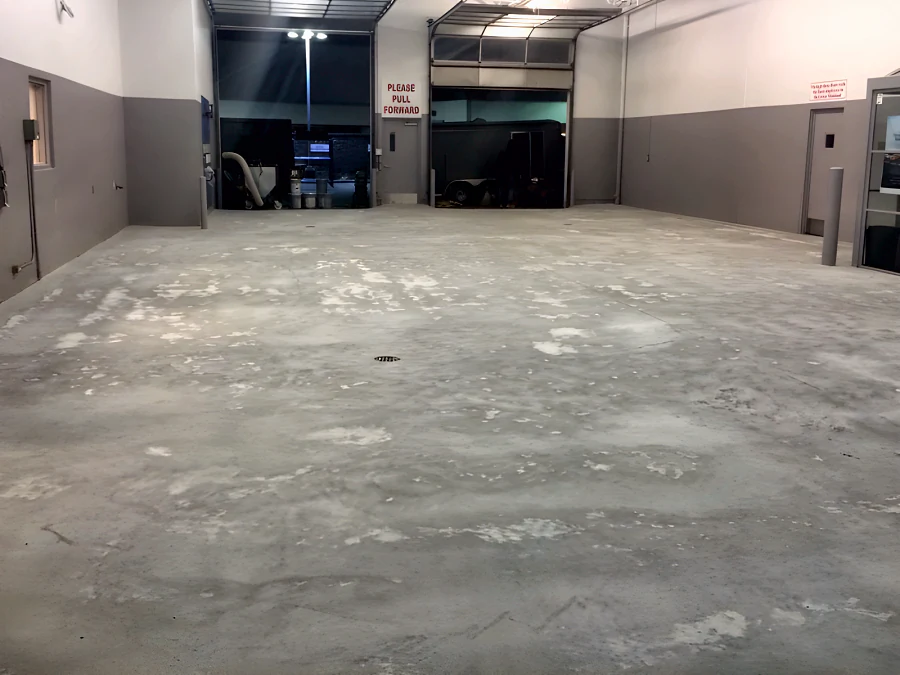
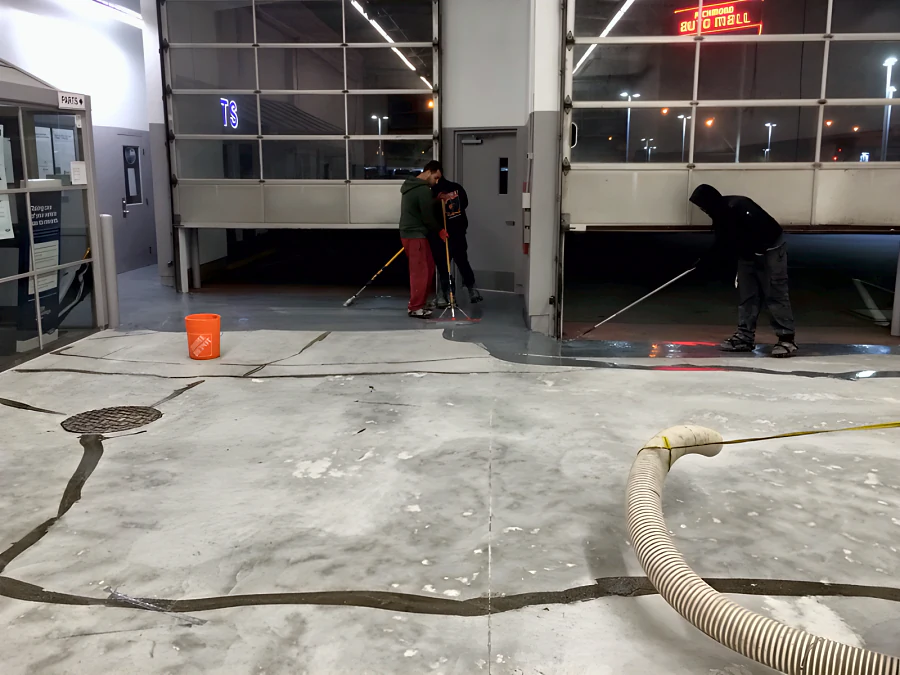
Toyota dealership, Richmond Auto Mall, 2014: the prepared slab before coating (left), and the crew laying the coat at the roll-up doors over the filled cracks (right). More on the projects page.
- Client
- Toyota dealership
- Setting
- Service drive, Richmond Auto Mall
- Work
- Crack filling and traffic coating
- Completed
- 2014
More workshop floors
Hyundai and Finning workshops
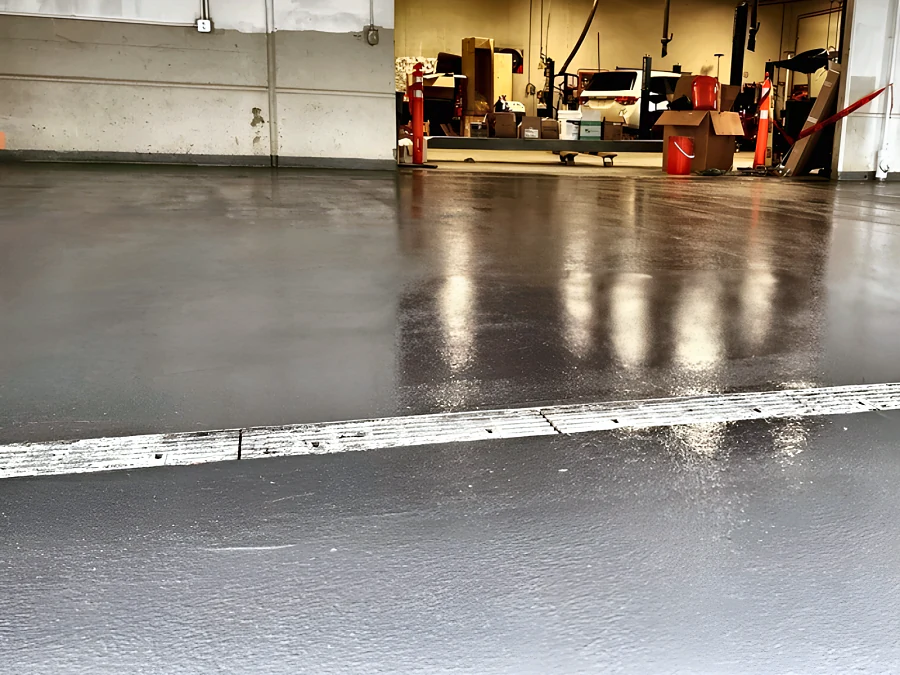
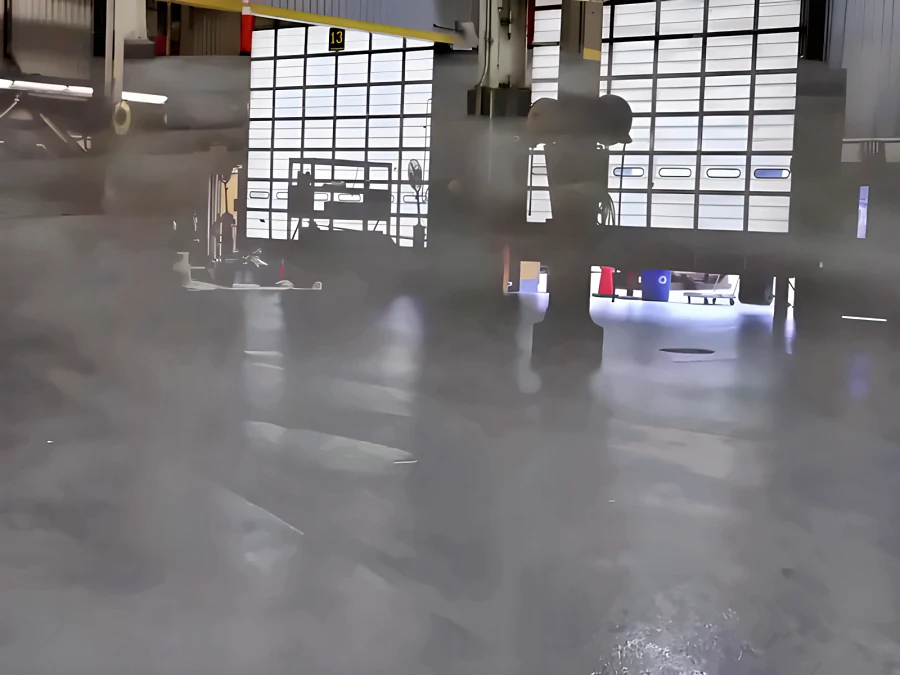
Two more floors that take vehicles and heavy equipment every day: an epoxy floor in a Hyundai dealership workshop, and a ResinTech EWS floor in a Finning heavy-equipment workshop.
Questions we get asked
Automotive flooring FAQs
What does brake fluid do to an epoxy floor?
Brake fluid is one of the harshest common chemicals a shop floor sees — it softens many coatings on contact and stains almost everything if left. Motor oil, coolant and fuel are easier but still real. Chemical resistance is published per system by the manufacturer, and a service bay specification is checked against that list, not against a general claim of chemical resistance.
Can service bays be coated without stopping the service department?
Bays are done in groups — typically evenings and weekends for the prep and coating, with each group back in service after cure. A service department loses some capacity for a period; it does not close. The rotation is planned with the service manager around booked work.
What finish works for a showroom?
Showrooms want light-reflective, seamless floors that photograph well and survive tyre contact and daily cleaning. High-build epoxy or polished concrete both serve, with UV-stable topcoats where daylight floods the glass line. The trade-offs — gloss retention, repairability, slip resistance — are walked through at assessment with samples, not decided from a catalogue.
Do you coat wash bays and detail bays?
Yes, and they are specified differently from dry bays: constant water, warm detergents and pressure-washing point at systems with hot-water tolerance and at falls that actually deliver water to the drains, with coving where walls take spray. A wash bay coated like a dry bay peels early — the conditions, not the room name, set the system.
Keep reading
Related pages
Site assessments
Send us the slab. We'll tell you what it actually needs.
Photographs and a rough area are enough to start. We'll come out, test moisture, and scope it properly.
Main (604) 968-2040 · Second (604) 230-0256 · estimating@westpacificcoatings.com