Industries — Hotels & Hospitality
Hotel and hospitality flooring
A hotel never closes, and its concrete never rests. The parkade takes valet traffic around the clock, the entry ramp is the first thing every arriving guest drives, the loading dock feeds the building daily, and the kitchen floor works two services a day under hot water and grease. When any of these needs coating or waterproofing work, the constraint is always the same: the property trades through the project, and the guests must not know it happened.
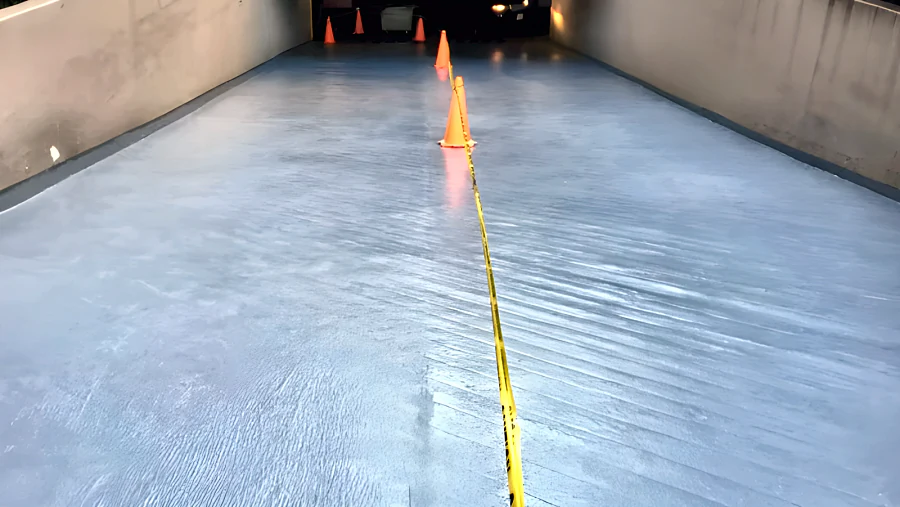
That constraint is our specialty. Among West Pacific's documented projects is an 8,400 square foot downtown Vancouver hotel ramp, the Sutton Place Hotel, recoated entirely as night work with the hotel open.
The hotel's concrete, ranked by risk
Where hotels actually lose money on floors
The parkade is the expensive one. A suspended parkade slab under a hotel is exposed to the same chloride attack as any Vancouver parkade — vehicles carrying road salt in, water finding the slab through worn membrane — but the consequences sit directly under a revenue-producing building. A failed membrane found late means concrete repair on top of recoating, and both at hotel logistics prices. The mechanics are the same as any parkade waterproofing project; the phasing discipline is what differs.
The ramp and porte-cochère are the visible ones. They take turning, braking traffic in all weather on a slope, which is the hardest duty a traffic coating sees, and they are photographed in every guest's memory of arrival. Systems here are selected for wear on inclines and for overnight return to service — and in Whistler, for freeze–thaw and de-icing salt, where detailing that survives the alpine season is a specification of its own, covered on our Whistler page.
Back of house, the kitchen is the floor that fails most often and matters most to inspections — thermal shock from hot wash-down rules out the ordinary epoxy that keeps getting sold into hotel kitchens, a problem explained on our commercial kitchen flooring page. Loading docks, service corridors and laundries round out the set, each a routine specification once the conditions are honestly listed.
How it runs
Working inside an operating hotel
- Phasing agreed with operations first.
Levels, bay groups and date windows are set with the GM and chief engineer before mobilisation — including which nights the loud work happens and where valet re-routes.
- Containment and housekeeping standards.
Dust walls, negative air where grinding runs near occupied space, protected guest paths, and a site left clean enough for a morning walk-through every day.
- Night and off-peak installation.
Ramps and arrival areas run overnight; parkade levels rotate to keep parking counts workable; kitchen zones run between close and prep.
- Systems chosen for the schedule they must keep.
Fast-cure options where a section must reopen by morning — always within the manufacturer's published conditions, never outside them.
- Documented handover.
What went down, where, over what readings — the file your engineering team inherits, and the basis for planned recoats instead of surprise failures.
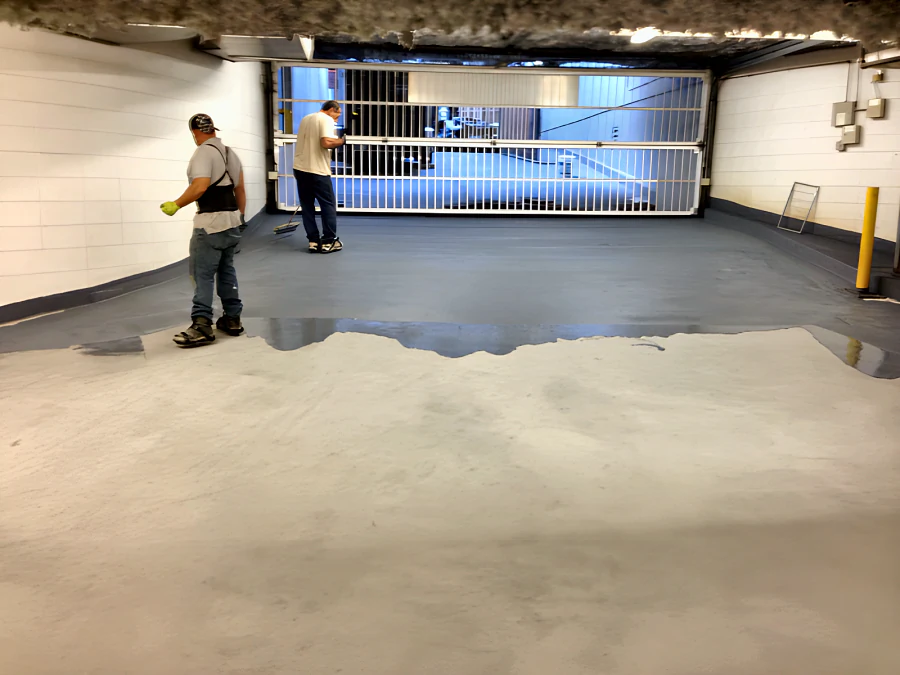
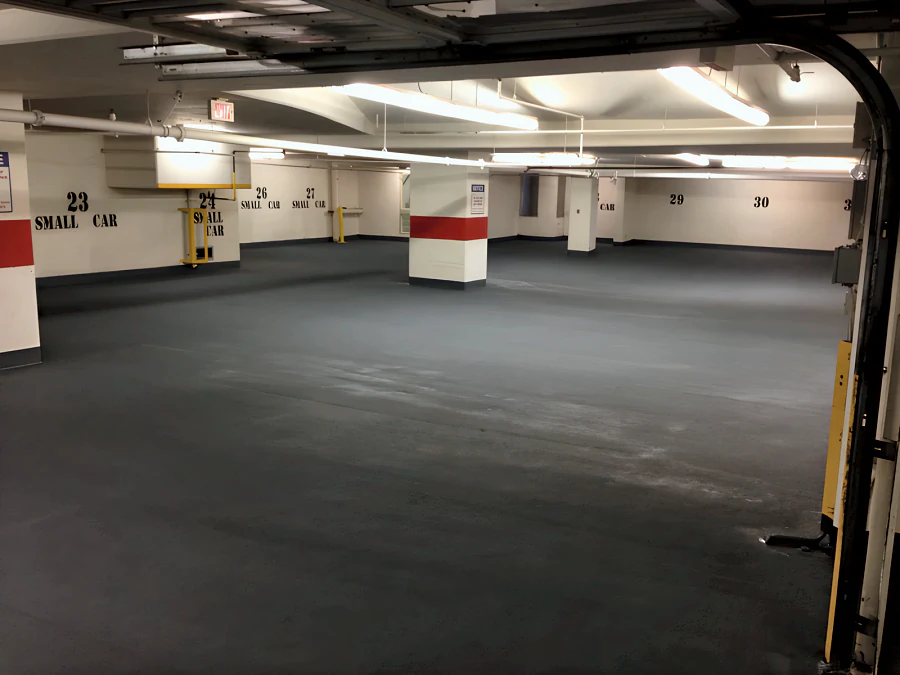
Hampton Inn & Suites by Hilton Vancouver-Downtown, 2013: the crew laying the Kelmar traffic coating by the parkade entrance gate (left), and a finished parking level with its textured surface (right). More on the projects page.
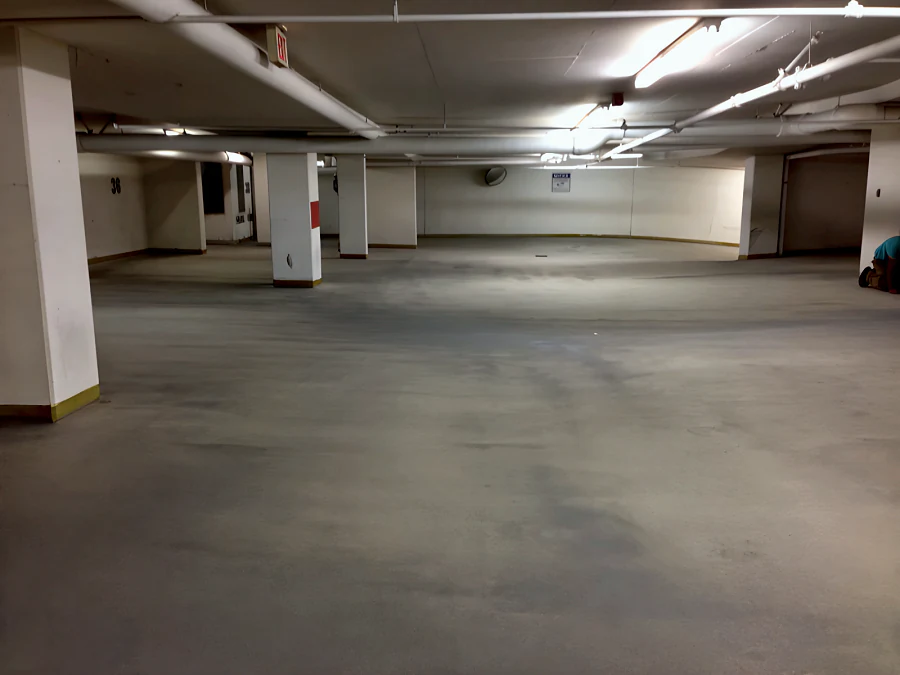
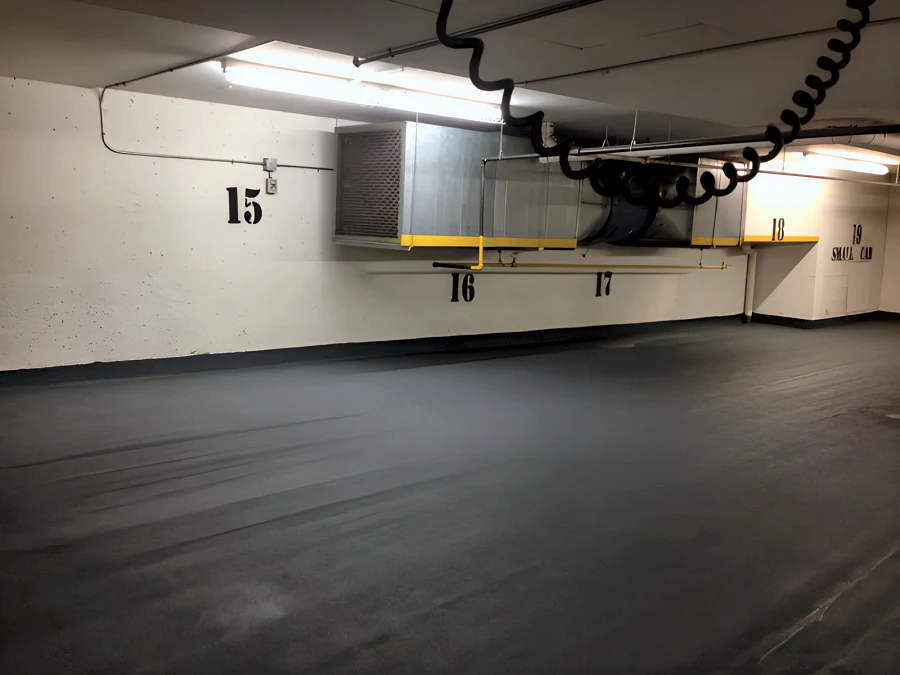
Hampton Inn & Suites, Downtown Vancouver, 2013: the Kelmar coat going down across a parking level (left), and turned up the wall base under the stall numbers (right). More on our Kelmar traffic coating page.
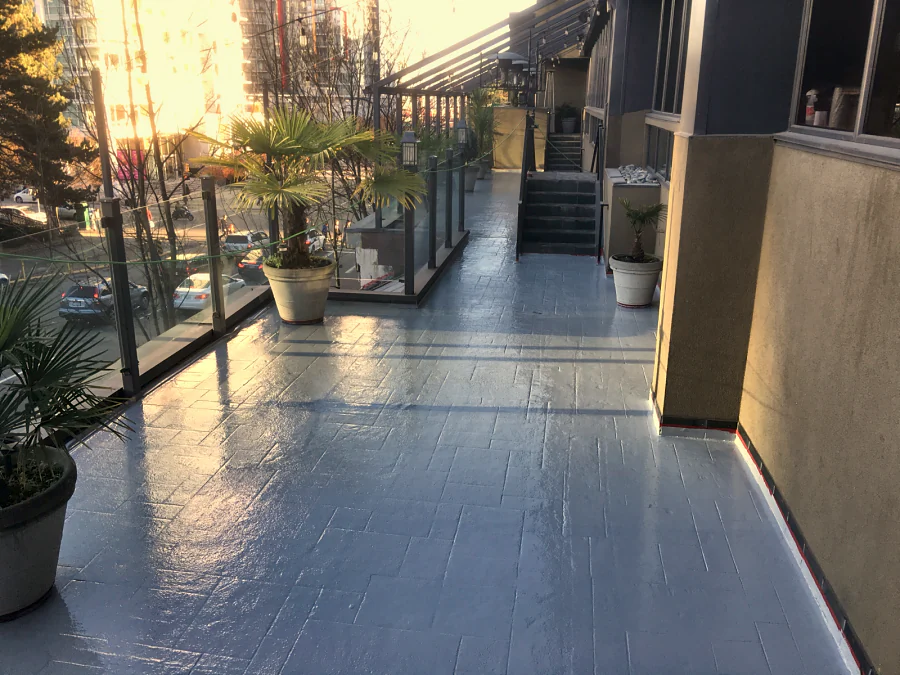
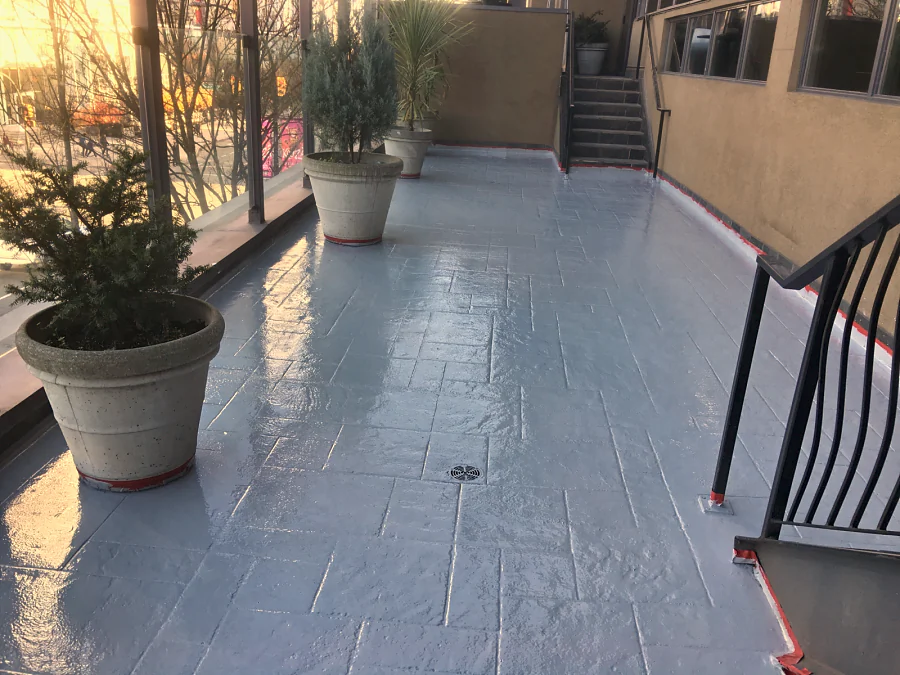
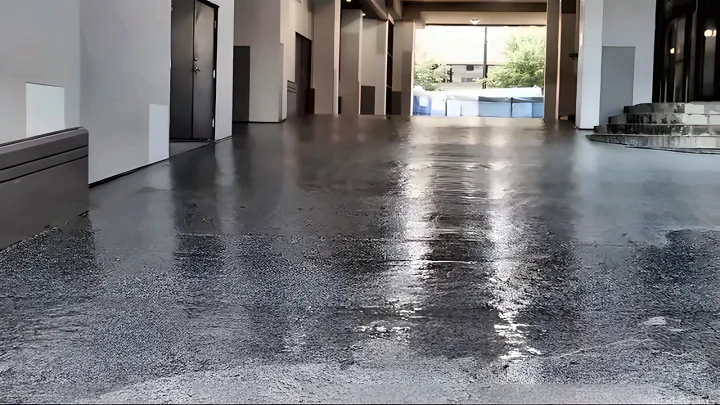
The Moxies patio at the Sandman Hotel on West Georgia Street, Vancouver, 2015: the finished grey traffic coating along the patio (left), and round the drain and the planter bases, the planters left in place (right). More on the projects page.
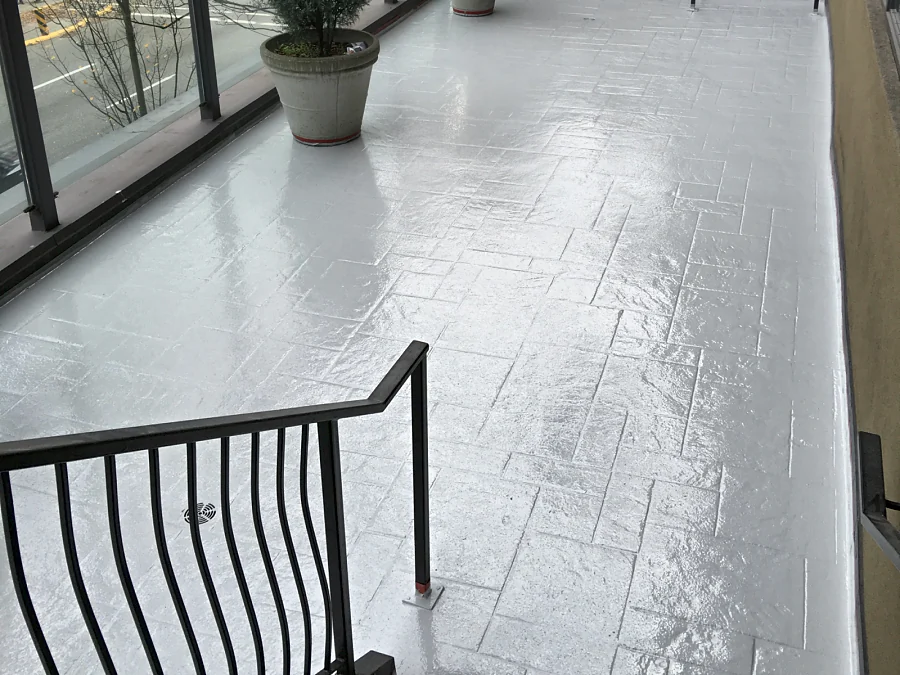
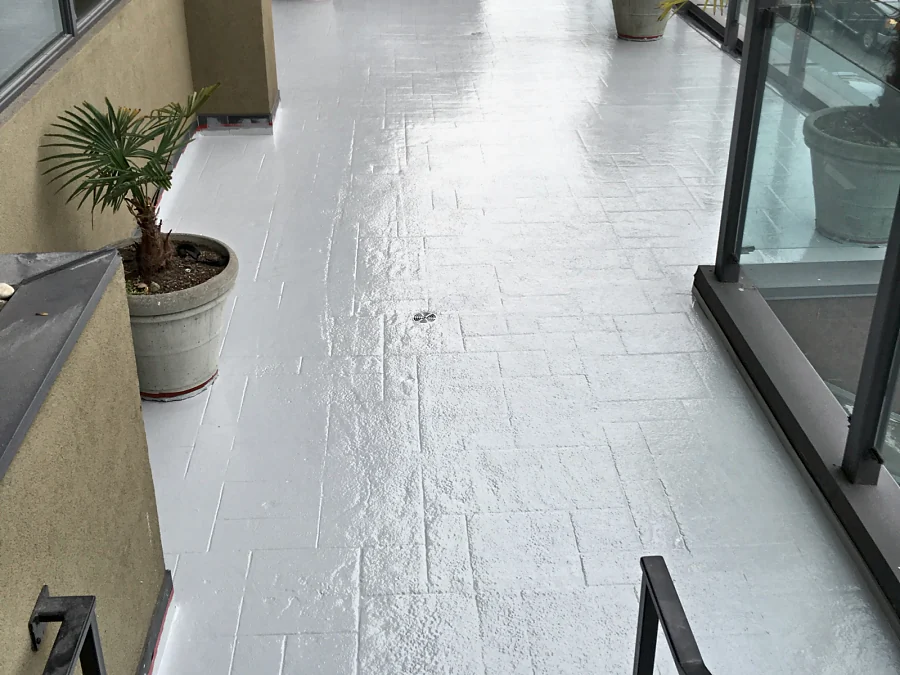
The same patio from the stairs (left), and along its length above West Georgia Street (right). All eight photos are on the projects page.
Questions we get asked
Hotel flooring FAQs
Can parkade work be done while the hotel stays open?
Yes — that is the normal case, not the exception. Parkades are re-membraned level by level or bay group by bay group, valet and guest parking are re-routed in agreed sequences, and the loudest operations are scheduled against occupancy patterns. One of our documented projects is the Sutton Place Hotel parkade ramp in Downtown Vancouver, recoated half the ramp at a time so the parkade stayed open.
How do you handle noise near guest rooms?
Surface preparation is the noisy part — grinding and shot blasting transmit through structure. The schedule maps which levels sit under or beside guest floors, books the loud work into agreed windows, usually late morning to afternoon, and keeps quiet operations for the rest of the shift. It is planned with your front office, not imposed on it.
What about the porte-cochère and entry ramp?
Ramps and arrival areas are the highest-visibility concrete a hotel owns and the hardest working — turning traffic, weather, and no tolerance for closure. They are typically done overnight in sections with traffic-rated systems selected for fast return to service. One of our documented projects is an 8,400 square foot downtown Vancouver hotel ramp completed as night work with the hotel open throughout.
Do you also do the back-of-house floors?
Yes — kitchens, dish pits, loading docks, service corridors and laundry rooms, each with the system its conditions demand. The kitchen side, where thermal shock rules out ordinary epoxy, is covered in detail on our commercial kitchen flooring page.
Keep reading
Related pages
Site assessments
Send us the slab. We'll tell you what it actually needs.
Photographs and a rough area are enough to start. We'll come out, test moisture, and scope it properly.
Main (604) 968-2040 · Second (604) 230-0256 · estimating@westpacificcoatings.com