Industries — Strata & Multi-Residential
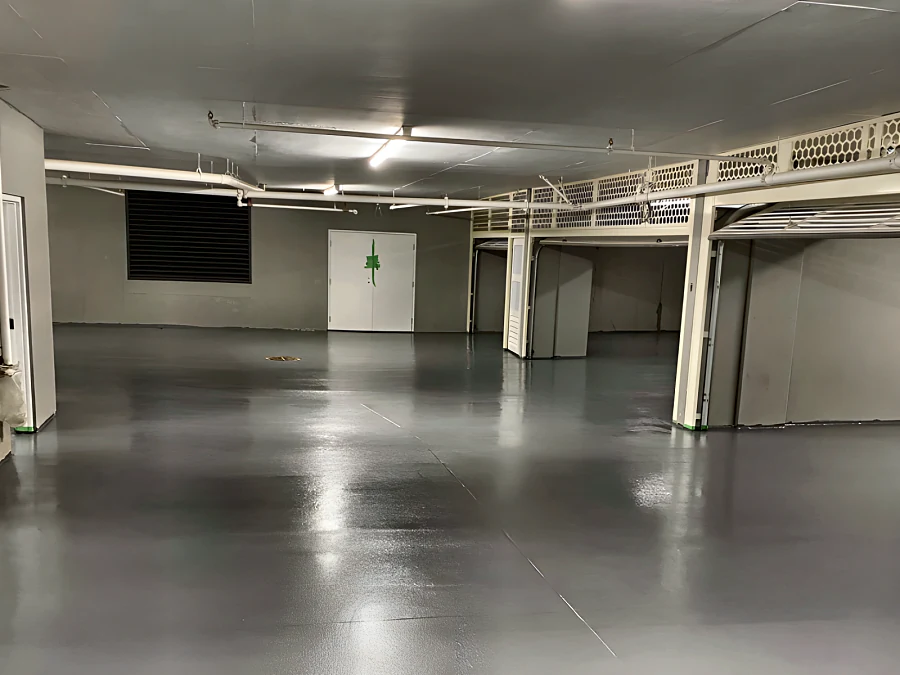
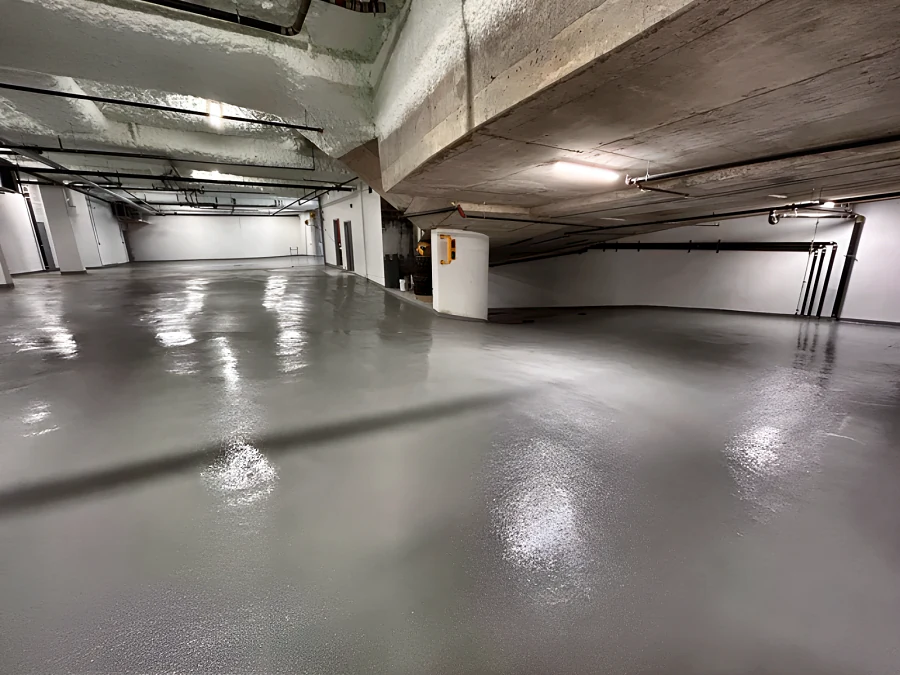
Strata parkades, decks and amenity floors
Most strata councils meet their parkade membrane for the first time in a depreciation report, as a line item with an alarming number beside it. The report is right to flag it: the membrane is the only thing between every winter's chloride-laden water and the reinforced slab that holds the building's cars — and repairs to the slab cost multiples of what protecting it costs. What the report does not explain is how the work actually gets done in an occupied building, or why quotes for it differ so much.
West Pacific has been doing this work across Metro Vancouver since 2001. Among our documented projects: a 68,000 square foot traffic coating through the parking levels beneath a residential tower, and a 22,000 square foot vehicular traffic coating in the parkade of a mid-rise residential building. We wrote the guide to the strata side of this decision — what a flagged parkade membrane actually means — because nobody else had.
The building's most expensive surface
What the parkade membrane is actually doing
A suspended parkade slab is structural concrete with steel inside it, and chloride — road salt carried in on tyres, dissolved in every drip of winter water — is the steel's enemy. Once chloride reaches the reinforcement, corrosion starts, rust expands, and the concrete spalls from within. The traffic membrane exists to stop that water at the surface. When it wears through at the drive aisles and turning bays, the clock starts, silently, under a floor that still looks acceptable in the dark of a parkade.
This is why the honest sequence is assessment first: where the membrane is worn, whether water is already getting through, what the chloride and delamination picture is, and only then a scope — repair quantities included, not discovered later. The systems themselves are traffic-rated membranes from the manufacturer lines we install, detailed at every drain, joint, column base and ramp transition, because membranes fail at the details long before they fail in the field of the slab.
In an occupied building
How strata work actually runs
- Condition assessment and a scope council can compare.
A written scope with repair quantities, detailing and phasing specified — so three bids can finally price the same job.
- A parking and access plan agreed first.
Levels or bay groups rotate; accessible stalls and visitor parking are maintained or relocated; notices go out on a schedule the property manager controls.
- Noise, dust and odour managed for residents overhead.
Grinding windows agreed in advance, containment at elevator lobbies and stair cores, and product selection with occupied floors above in mind.
- Phased installation with details first-class.
Drains, joints, upturns and column bases detailed per the system manufacturer — the difference between a membrane that lasts and one that comes back early.
- Documentation for the strata record.
What was installed, where, over what condition — the file that makes the next depreciation report cycle a scheduled renewal instead of a surprise.
The full technical side — chloride attack, membrane systems, phasing — lives on our parkade waterproofing page. The strata governance side — reserve planning, the BC reporting rules, what consultants require — is in the depreciation report guide.
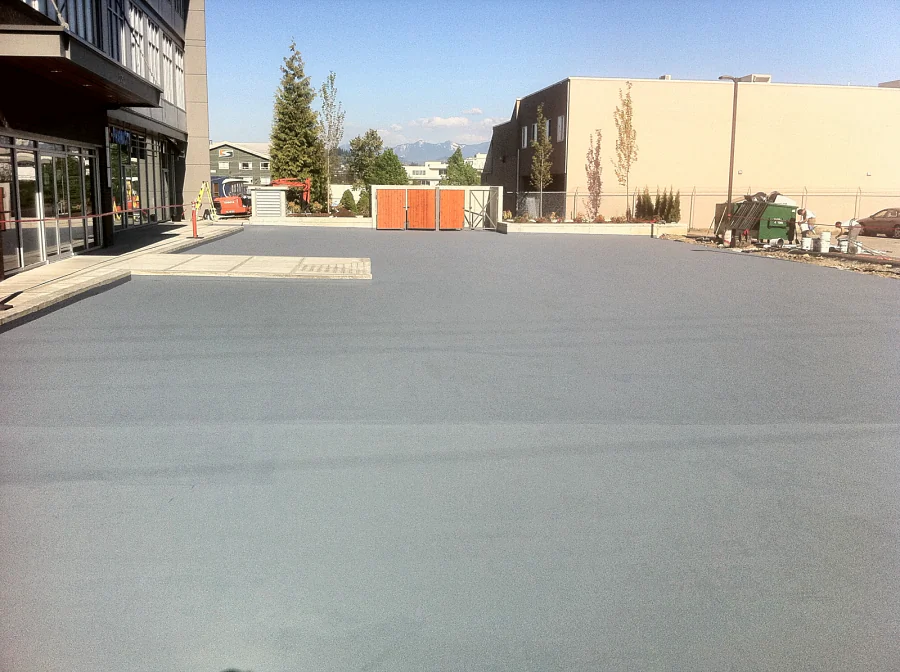
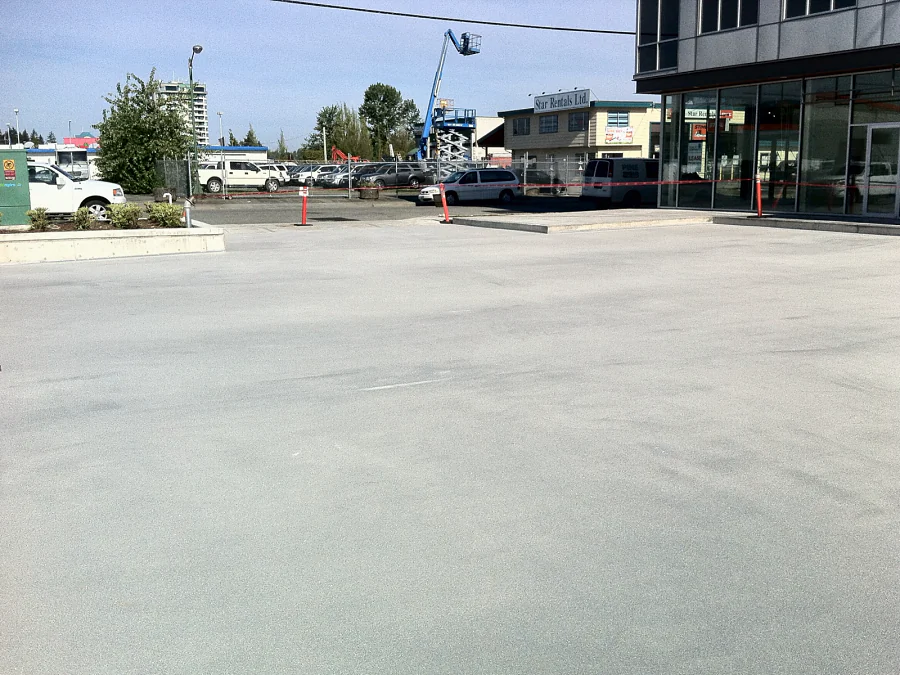
The exterior parkade deck of a strata building in Abbotsford, 2011: finished in a grey traffic coating (left), and the same deck with the aggregate broadcast across it before the top coat (right). More on the projects page.
Questions we get asked
Strata FAQs
Our depreciation report flagged the parkade membrane. How urgent is that?
It depends on what the membrane is protecting and how far the water has already got. A worn membrane over a sound slab is a recoating project; a failed membrane over a slab that has been taking chloride-laden water for years is a repair project with a membrane on top, at a different price. The honest first step is a condition assessment, not a coating quote — and the gap between those two numbers grows every winter the decision waits.
Can residents keep parking during the work?
Yes. Parkades are done in phases — a level or a bay group at a time — with a parking plan agreed with council and the property manager before work starts. One of our documented projects is a 50,000 square foot commercial parkade in Burnaby completed in phases with no full closure at any point.
Why do strata parkade quotes vary so widely?
Because they are rarely quoting the same scope. The visible line is the membrane; the lines that differ are surface preparation, concrete repair quantities, detailing at drains, joints and column bases, and traffic management. A low quote that is silent on repair quantities is not cheaper — it is incomplete, and the difference arrives later as extras. Insist every bidder prices the same specified scope.
What about our roof deck and amenity areas?
Exposed decks are a distinct specification: UV-stable, fully aliphatic systems that hold colour, membranes detailed for planters, drains and door thresholds, and slip resistance chosen for barefoot and furniture traffic.
Keep reading
Related pages
What a flagged membrane means, the BC rules, and the scope items that get omitted.
Parkade waterproofingTraffic membranes, chloride attack and phased installation in detail.
Concrete repairWhen the water got there first — spall repair and restoration under the new membrane.
Site assessments
Send us the slab. We'll tell you what it actually needs.
Photographs and a rough area are enough to start. We'll come out, test moisture, and scope it properly.
Main (604) 968-2040 · Second (604) 230-0256 · estimating@westpacificcoatings.com