Squamish · Since 2001
Epoxy and industrial floor coatings in Squamish.
The Howe Sound corridor — marine exposure at sea level plus real freeze–thaw above it, on a fast-growing industrial and light-manufacturing base.
Squamish
Two climates in one town
Squamish is unusual because it sits at the bottom of the Sea-to-Sky corridor with salt water on one side and mountains on the other. Buildings at sea level take marine chloride exposure much like the North Shore. Anything up the hill starts picking up the freeze–thaw cycling that dominates Whistler an hour further north.
That matters for specification because the two conditions pull in different directions. Chloride exposure argues for a dense, well-sealed system that keeps salt water away from steel. Freeze–thaw argues for flexibility, because a rigid system cracks as the slab moves. In Squamish we frequently end up specifying for both rather than picking one.
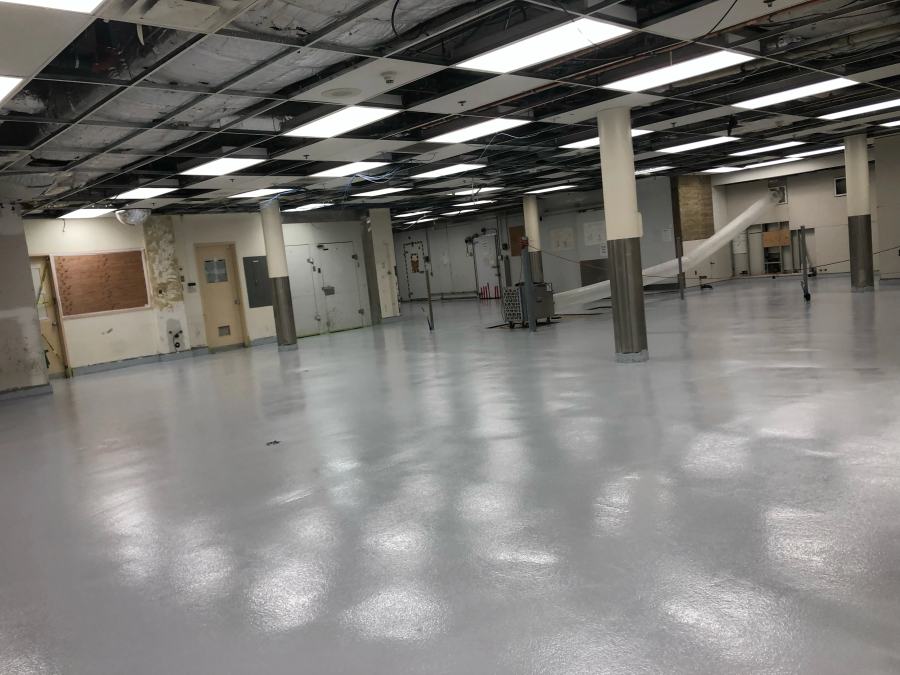
The industrial side has grown quickly — light manufacturing, trades shops and outdoor-industry facilities, most in newer buildings with slabs on grade. Those get moisture tested like any other, because a new slab is not a dry slab and green concrete is the single easiest way to lose a floor coating in its first year.
- Exposure
- Marine chloride plus freeze–thaw
- Common substrate
- Newer slab on grade
- Watch for
- Green concrete moisture
Services
What we install in Squamish
Parkade waterproofing
Traffic-bearing membranes for Squamish parkades, ramps and roof decks.
Learn more →Questions
What Squamish clients ask us.
Does Squamish weather actually change the specification?
Yes, more than most clients expect. Squamish gets genuine freeze-thaw cycling that the Vancouver core largely does not, and freeze-thaw is mechanically destructive: water gets into concrete and cracks, freezes, expands, and enlarges the crack every cycle. Add winter road salt on the Sea-to-Sky and you have both the mechanical and the chemical attack running together. Crack detailing and drainage matter more here than in the city.
How does the wind affect exposed deck work?
Squamish wind is a real scheduling factor. Strong wind carries dust and debris onto a wet coating, which contaminates the finish, and it affects how some materials are applied. On exposed decks we work the weather window rather than the calendar, which means we would rather move a day than install into conditions that will show in the result.
Is the installation season shorter up here?
For exposed exterior work, yes. These systems have minimum substrate and ambient temperature requirements, and the shoulder seasons close in earlier in the corridor than in the Lower Mainland. Enclosed parkades and interior industrial floors are far less constrained since we control conditions inside. If you want exterior work done, plan it into the season rather than against it.
Do you travel to Squamish for a single job?
Yes, and we work the corridor through to Whistler and Pemberton. Travel is a factor on small jobs, so if there is other work due it is worth combining. For a full deck or a commercial floor it is a normal project for us.
Site assessments
Have a slab in Squamish you're worried about?
Photographs and a rough area are enough to start. We'll come out, test moisture, and scope it properly.
Main (236) 873-2580 · Second (604) 230-0256 · estimating@westpacificcoatings.com